Most people assume the math on this one is obvious: furnished costs more, so unfurnished must be the budget choice. That’s true in a narrow sense and misleading in a bigger one, because a furnished unit skips a few thousand dollars of upfront spending that an unfurnished lease quietly hands you the moment you get the keys. Whether furnished or unfurnished actually saves you more depends almost entirely on two things, how long you’re staying and how much furniture you already own, not on which option looks cheaper on the listing itself.
In short: unfurnished rent is lower every month, but you’re on the hook for buying everything from a bed to a kitchen table, which can easily run into the thousands. Furnished rent runs higher, sometimes a lot higher, but that premium buys you a move-in-ready apartment with nothing extra to purchase or haul up three flights of stairs. Which one wins comes down to your timeline.
What “Furnished” Actually Means on a Winnipeg Lease
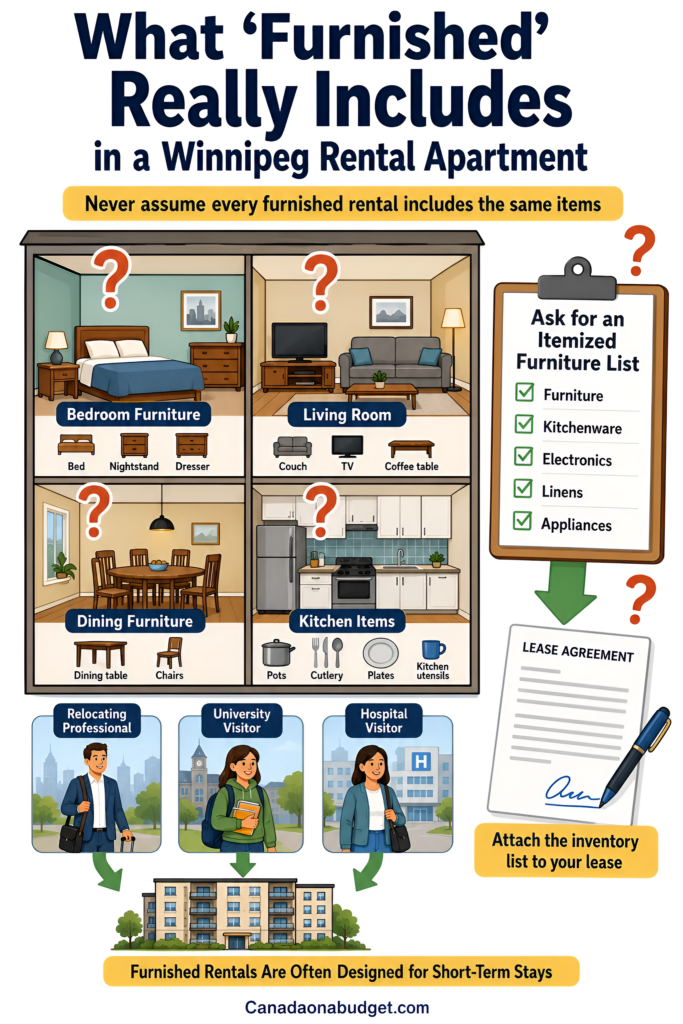
Manitoba doesn’t set a legal definition for what a landlord has to include to call a unit furnished, so it varies more than renters expect. Some listings mean a bed, couch, and dining table and nothing else. Others include a fully outfitted kitchen down to the pots and cutlery, plus linens and a TV. Before assuming a furnished apartment covers everything, ask the landlord for an itemized list of what’s actually in the unit, ideally attached to your lease, since that list becomes the reference point if anything goes missing or gets damaged later.
Furnished listings in Winnipeg also skew heavily toward shorter stays. Property managers marketing to relocating professionals, hospital and university visitors, and people between homes use furnished units as their main draw, which is part of why the pricing on them varies so widely from one listing to the next.
What Winnipeg Rent Actually Looks Like, Furnished and Unfurnished
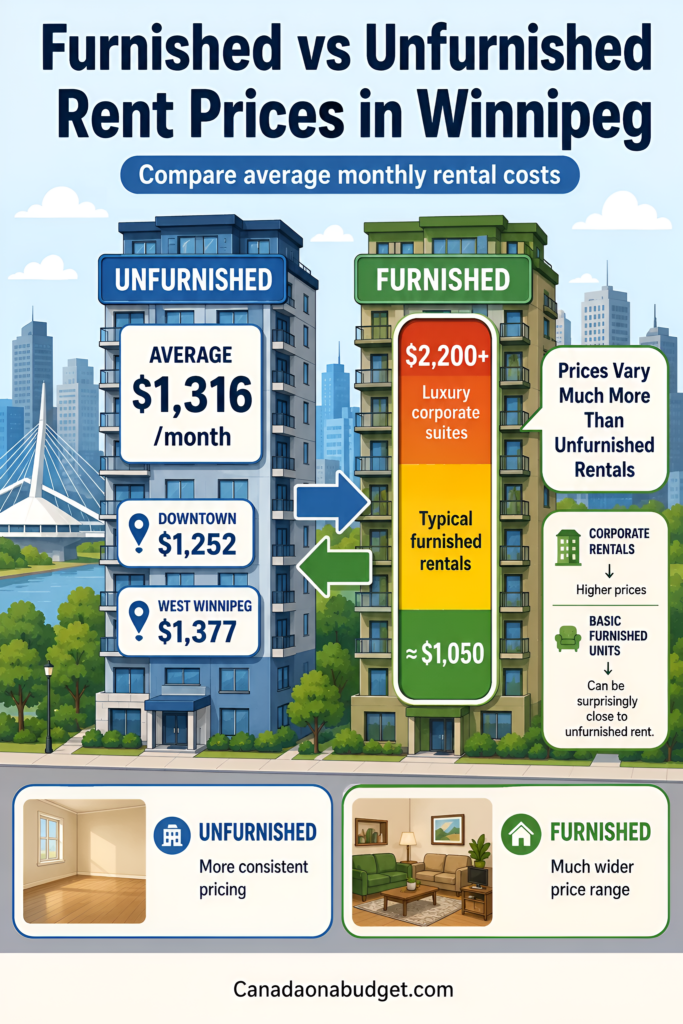
As of March 2026, the average unfurnished one-bedroom in Winnipeg runs $1,316 a month, with downtown units averaging on the lower end around $1,252 and West Winnipeg running closer to $1,377. That’s the baseline most renters are comparing against.
Furnished units don’t have a single clean average the way unfurnished ones do, because the furnished market blends everything from a modest one-bedroom with secondhand furniture to a fully serviced corporate suite. Listings tracked across Winnipeg range from roughly $1,050 up past $2,200 a month, a spread wide enough that quoting a single “furnished average” would be more misleading than useful. The honest takeaway is that a basic furnished apartment can land surprisingly close to an unfurnished one, while a furnished unit aimed at corporate or short-term renters can run hundreds more.
The Real Cost of Going Unfurnished
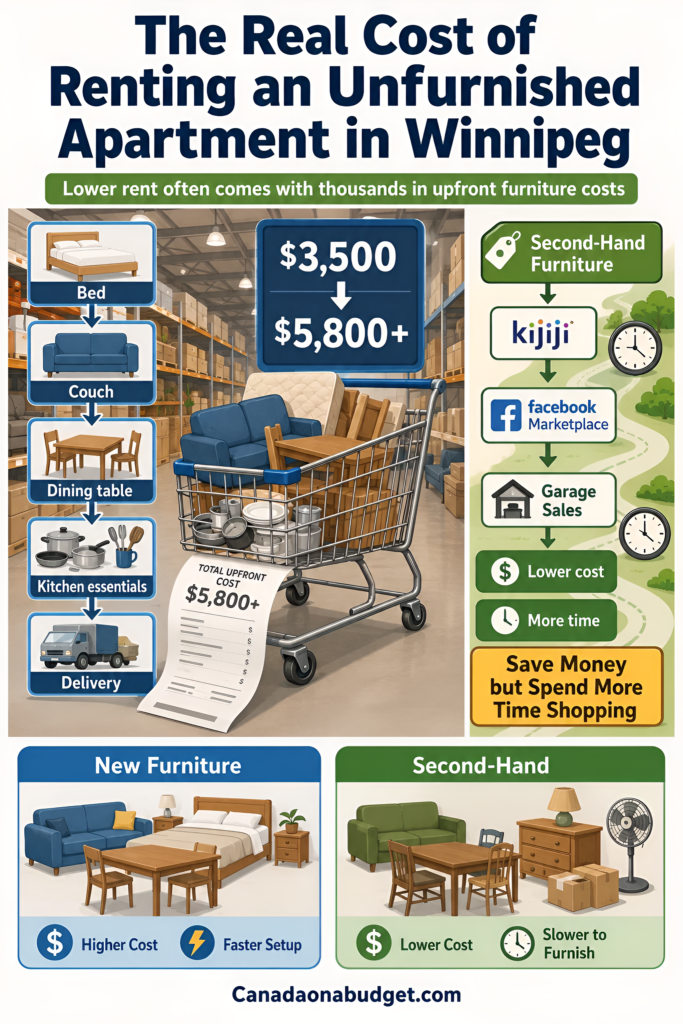
Choosing unfurnished doesn’t just mean lower rent, it means an upfront bill you pay before you’ve settled in. A Canadian furniture retailer’s own cost breakdown for furnishing a one-bedroom apartment puts the essentials, bed, couch, dining setup, and basic kitchen items, at roughly $3,500 to $5,800 when bought new. That range doesn’t include delivery fees, which can add a few hundred dollars more depending on how much you’re moving and whether you need help getting it up the stairs.
Buying secondhand through Kijiji or similar listings can cut that number substantially, sometimes down to a few hundred dollars for the basics if you’re patient and flexible on style. The tradeoff is time. Furnishing an apartment secondhand piece by piece usually takes weeks, not a single shopping trip, and you’ll likely be living out of boxes or on a borrowed air mattress for a stretch while you track down a couch and a dresser that don’t cost a fortune.
The Security Deposit Rule That Catches People Off Guard
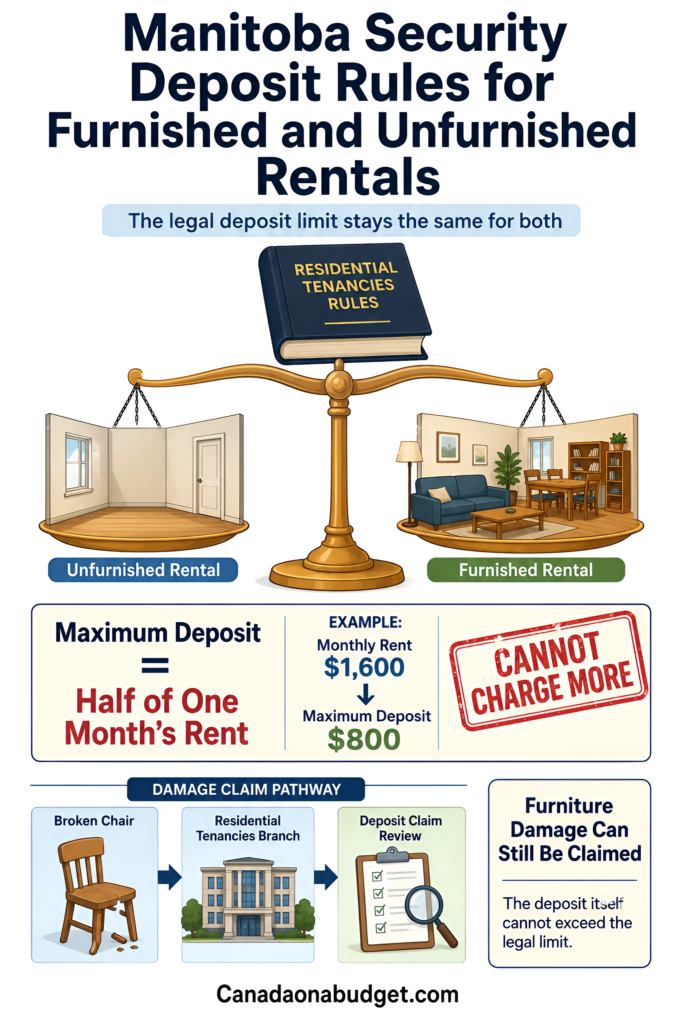
Here’s a detail that trips up a lot of renters comparing furnished and unfurnished units: Manitoba caps the security deposit at half of one month’s rent, and that cap applies no matter what’s in the unit. A furnished apartment with several thousand dollars of furniture inside it doesn’t come with a higher legal deposit ceiling. If your rent is $1,600, your landlord can’t ask for more than $800 as a security deposit, whether that unit is bare or fully furnished top to bottom. Some listings and even a few landlord-facing guides get this wrong online, so it’s worth knowing the actual number if a landlord tries to collect more.
That doesn’t mean furniture damage is a non-issue. If something gets broken or badly worn beyond normal use, the landlord can still make a claim against your deposit through the Residential Tenancies Branch, the same process used for any other damage dispute. It just can’t exceed that half-month cap.
When Furnished Comes Out Ahead
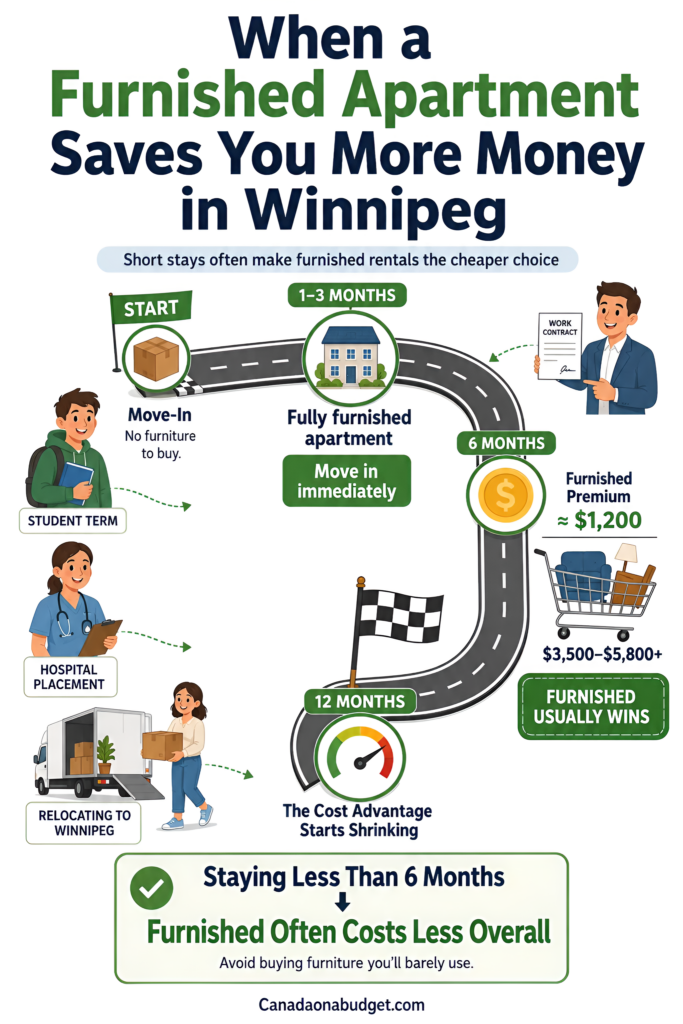
A furnished unit tends to win financially in a few specific situations. If you’re staying somewhere less than about six months, whether for a work contract, a school term, or while you’re apartment hunting for something longer-term, the cost of furnishing a place from scratch rarely pays for itself before you’d be moving again anyway. The same goes if you’re relocating from outside Manitoba with little more than what fits in a car or a couple of suitcases, since replacing a full household’s worth of furniture on short notice tends to cost more per piece than shopping around over time.
Say, for the sake of comparing the math, a furnished one-bedroom runs $200 a month more than a comparable unfurnished unit nearby. Over a six-month stay, that’s $1,200 in premium rent, well under the $3,500-plus it typically costs to furnish a place from scratch with new furniture. Stretch that same $200 premium to a full year and you’re at $2,400, still cheaper than buying new, though the gap narrows fast if you can find secondhand furniture instead.
When Unfurnished Comes Out Ahead
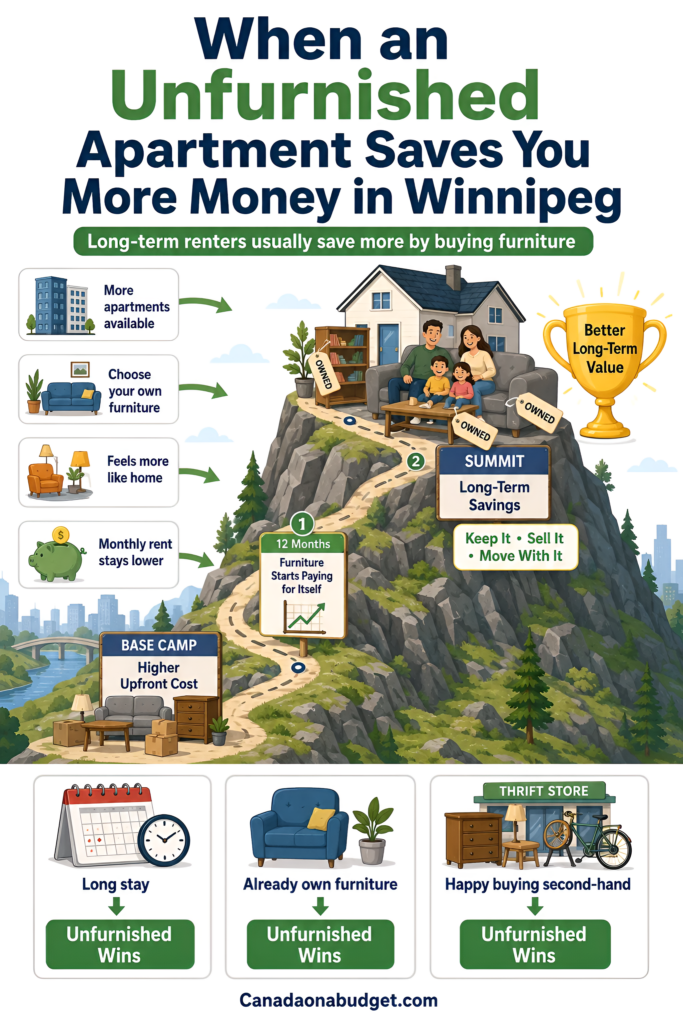
The math flips for anyone staying longer than a year, especially if you already own furniture or don’t mind building up your place gradually. Once you’re past that rough break-even point, the monthly furnished premium keeps accumulating with nothing extra to show for it, while furniture you buy is yours to keep, sell, or bring to your next place. Unfurnished units are also more common across bachelor and studio listings and standard one, two, and three-bedroom apartments around the city, so you’ll generally have more units to choose from if you’re not restricting your search to furnished-only listings.
There’s also a comfort argument that doesn’t show up on a spreadsheet. Living with furniture you picked out, in a layout you set up yourself, tends to feel more like home than living around someone else’s couch and dishes, even if the couch is perfectly fine.
Doing the Math for Your Own Move
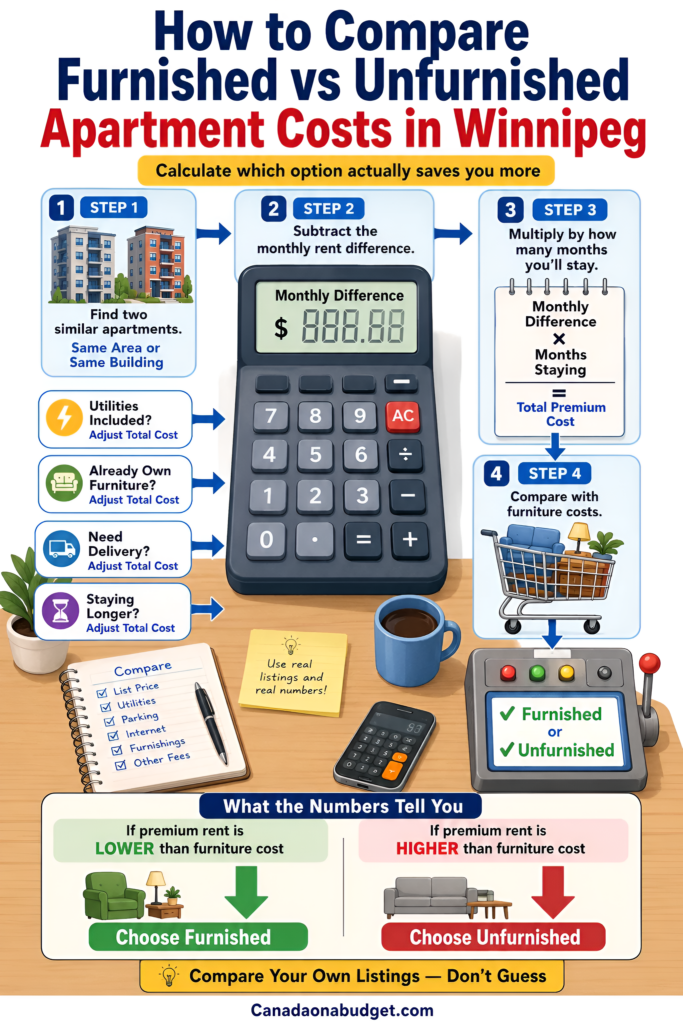
Since Winnipeg doesn’t publish one clean number for how much more furnished units cost, the only reliable way to compare is to run your own two listings side by side. Pull an unfurnished unit and a furnished one in the same building or neighborhood, subtract the rent difference, and multiply that gap by how many months you expect to stay. If that total lands under what it would cost you to furnish the unfurnished option, furnished is the better deal for your specific timeline. If it lands over, unfurnished wins, especially if you’re willing to source some furniture secondhand.
For utilities-included listings, factor that into the comparison too, since some furnished units bundle utilities into the rent while unfurnished ones often bill them separately, which changes the real monthly gap between your two options.
Common Questions About Furnished and Unfurnished Rentals in Winnipeg
Does “furnished” always include kitchen items like dishes and pots? Not automatically. Some listings include a fully stocked kitchen, others include only large furniture like a bed and couch. Always ask for a written list of what’s included before signing, since assuming more than what’s actually there is a common and avoidable mistake.
If I already own some furniture, can I get a discount on a furnished listing? It’s worth asking, but most landlords price furnished units as a package rather than negotiating item by item. You’re more likely to get somewhere by asking whether the landlord has an unfurnished unit available in the same building instead.
What happens if I damage the landlord’s furniture in a furnished unit? The landlord can file a claim against your security deposit through the same dispute process used for any other damage, but the total deposit they collected still can’t exceed half a month’s rent, regardless of how much the furniture is worth.
Once you’ve worked out which option actually fits your timeline and budget, narrowing down neighborhoods is usually the next step. Comparing a few budget-friendly Winnipeg neighborhoods side by side, or checking listings specifically under $1,000 a month, can help you land on a unit where the furnished-or-not decision is the last piece of the puzzle rather than the deciding factor.